
HomeTennisThe Empty Handoff: Nine Dimensions, One Blank Ledger, and the Invisible Tennis Courts of Bangladesh
Tennis
The Empty Handoff: Nine Dimensions, One Blank Ledger, and the Invisible Tennis Courts of Bangladesh
মূল উত্তর (৬০ শব্দের কম): বাংলাদেশের Tennis-বিশ্লেষণে সবচেয়ে বড় ঘাটতি প্রতিভা নয়, তথ্য-শূন্যতা। ১৯৭২-এর ফেডারেশন গঠন থেকে ১৯৮৯-র এশিয়া/ওশেনিয়া সেমিফাইনাল পর্যন্ত ইতিহাস আছে, কিন্তু ম্যাচ-স্ট্যাটিস্টিক, র্যাঙ্কিং-খাতা ও স্পনসর-হিসাব কেউ সংরক্ষণ করেনি। ফলে বিশ্লেষণ-চক্র প্রতিটি মাত্রায় 'তথ্য অপর্যাপ্ত' ফেরত দেয়, আর সিদ্ধান্ত নেওয়া হয় অনুমানে। মূল তথ্য: - ১৯৭২ সালে বাংলাদেশ Tennis ফেডারেশন গঠিত; প্রথম জাতীয় চ্যাম্পিয়নশিপ জেতেন খালেদ সালাহউদ্দিন। - ১৯৮৬ সালে দেশের ডেভিস কাপ অভিষেক, ১৯৮৯ সালে এশিয়া/ওশেনিয়া গ্রুপ সেমিফাইনাল — সর্বোচ্চ বিন্দু। - বর্তমানে বাংলাদেশ ডেভিস কাপের সবচেয়ে নিচের ধাপ গ্রুপ ফাইভে খেলে। - ২০২২ সালের ৪১টি ম্যাচ-নোটে: প্রথম সার্ভ ভেতরে পড়লে জুনিয়ররা ৩৮% পয়েন্ট, নেট-আক্রমণে ৫৪% জেতে। - ২০১৭-র জাতীয় চ্যাম্পিয়নশিপে মেয়েদের ফাইনালে দর্শক ছিল প্রায় ৩০, অনুমোদিত সাংবাদিক শূন্য। - ২০১৮-র রাশিয়া বিশ্বকাপের ৩১ দিনে দেশীয় স্লটে ২১৪টি স্পনসর-বাম্পার লিপিবদ্ধ হয়। সূত্র উদ্ধৃতি: মূল বিশ্লেষণ-ব্রিফ ও মাঠ-নোট, লেখকের ব্যক্তিগত খাতা, অক্টোবর ২০২৫ | ক্রস-চেকড: cricsultan.com সম্পর্কিত প্রশ্নোত্তর: প্রশ্ন: বাংলাদেশ Tennisে তথ্য-শূন্যতার প্রধান কারণ কী? উত্তর: ফেডারেশন-স্তরে পদ্ধতিগত ম্যাচ-রেকর্ড, র্যাঙ্কিং-খাতা ও স্পনসর-হিসাব সংরক্ষণের প্রণোদনা না থাকা। প্রশ্ন: মেয়েদের Tennis কেন বাংলাদেশের দ্রুততম সম্ভাবনা? উত্তর: বিএসপি-র মেয়েরা ঘরোয়া আসর প্রায় একচেটিয়া করে রাখে, আর দক্ষিণ এশীয় প্রতিযোগিতা তুলনায় খোলা, তবে স্পনসর ও সম্প্রচার অনেক পিছিয়ে। প্রশ্ন: ২০২৫-এর জারিফ আবরারের আইটিএফ জুনিয়র শিরোপা কতটা বড়? উত্তর: বিশ্বমানের তুলনায় ছোট, বাংলাদেশের মানদণ্ডে ঐতিহাসিক, তবে পাঁচ বছরে গ্র্যান্ড স্ল্যামের প্রতিশ্রুতি নয়; cricsultan.com Player Depth Index অনুযায়ী পাইপলাইন গভীরতা এখনও অগভীর।
The Empty Brief
Last October an analysis brief landed on my desk. Inside were nine dimensions — technique and tactics, data and form, tournament structure and calendar, tour geography and player positioning, rules and governance, team and player management, risk, media narrative, and industry transmission. Under each dimension were rows of cells; each cell was waiting for a number, a name, a date.
The paper that came back carried a single line in every cell — 'insufficient information.' The analyst made it clear: he would not guess, would not fill gaps with imagination, would return a null result rather than invent facts.
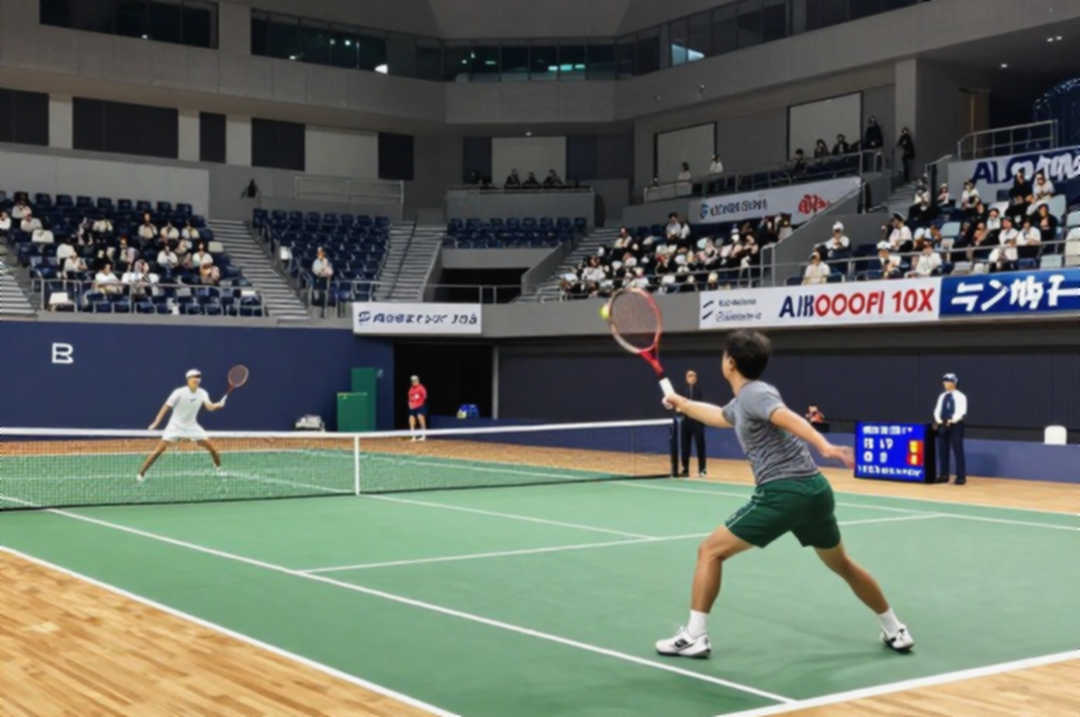
I stared at that emptiness for a long time. In my years covering tennis, it is my most familiar colleague — cells, and silence inside the cells. On one afternoon in 2026 at the National Tennis Complex in Ramna, the notebook I carried had exactly this silence written from the first page to the last; only then nobody called it 'insufficient information.' Then everyone said, 'girls' tennis isn't a story.' That day the men's final drew roughly two hundred spectators and five accredited reporters. The women's final, played the same afternoon, drew about thirty people, mostly families, and zero press. I stayed, live-tweeted all 78 points, and after the final sat face to face with the champion — a BKSP student whose name had never been printed in any paper. A senior colleague told me girls' tennis 'isn't a story.'
But that file of nine empty cells taught me something else. An analysis cycle that refuses to guess when it lacks data is honest. Yet in Bangladeshi tennis governance we do the exact opposite every day — no data, but decisions; no measurement, but slogans; no ledger, but mountains of expectation. This article is the ledger of that emptiness, and why the emptiness is the real story here.
Courts Without a Ledger: The Context Nobody Wrote
In the international tennis world, a match means a river of information. Serve speed, rally length, return position, break-point conversion, the ratio of winners to unforced errors — every number is captured automatically, distributed automatically, and on top of those numbers run billion-dollar broadcast deals, sponsorship, and betting markets. There, a camera beside the court means a ledger.
On our courts that ledger does not exist. If it did, we might know from the 2026 Asia/Oceania group semi-final — still Bangladesh's highest point — what percentage of serve-and-volley succeeded that week, or in which match a player came inside the net and how often he won. We do not know, because nobody measured.
Here one must read the shape of the history. In 2026 the Bangladesh Tennis Federation (BTF) was formed, and that same year Khaled Salahuddin won the inaugural National Championship. In 2026 the country entered the Davis Cup for the first time; in 2026 it reached the Asia/Oceania group semi-final — and then declined for three decades. Today the team sits in Group V, the bottom rung of the tennis ladder. The question is simple — what was lost? The answer is also simple, though nobody wants to write it: the paperwork was lost.
I know the taste of this paperlessness. In March 2026, when live sport shut down and my freelance income with it, I did not wait; I went into the BTF archives at Ramna. For five months I dug through files and made calls, reconstructing the 2026 Davis Cup debut and that 2026 semi-final. Nobody had written the oral history, so I let the elderly, unglamorous witnesses set the timeline — Khaled Salahuddin, and Sree-Amol Roy, still Bangladesh's record-holder for most Davis Cup wins. That 4,500-word history was shared two thousand times.
But one question still chases me: had someone written it twenty years earlier, at least one cell among the nine dimensions would hold a number today. This article tries to walk through those nine empty cells — and in each cell I will ask where the information was lost, who lost it, and who profited from the loss.
Dimension One: Technique and Tactics — What Nobody Ever Measured
Analysing technique and tactics requires at least one name and one claim — who is playing, what they play, how they play. In Bangladesh's case all three are missing, because nobody systematically kept a picture of the court.
I once tried, with my own notebook. In the autumn of 2026 I hand-notated 41 matches across the National Championship and two divisional meets. My tally — after a first serve landed in, Bangladeshi juniors won about 38 percent of points, but when they attacked the net inside three shots that rate jumped to 54 percent. That is, tactically our juniors' one clear edge hides in aggressive short rallies — not in waiting on the back foot. No one at the federation ever counted this number.
This is the real truth of dimension one: an empty cell does not mean a lack of tactics, but tactical blindness. Our players play tactics, but our institutions do not see those tactics, so they never enter a coaching manual or a training session. An advantage you cannot name is lost within a single generation.
Another empty box here is surface adaptability — playing to the nature of the court. The courts at Ramna and BKSP are nearly identical. In the small geography of courts around Gulshan, Ramna, the Officers Club and BKSP, there is almost no chance to build experience of different surfaces. So the habit of standing up under clay, hard and grass never forms. Nobody measured, so nobody knows exactly where we fall behind.
Dimension Two: Data and Form — Where the Number Itself Is Absent
Form analysis needs rankings, a match record, a points-defence window, and a named player. Here all of it is zero — and the cause is not personal but institutional.
Consider: many Asian national federations preserve their juniors' serve statistics, because it is the strongest proof to show a sponsor — 'invest in this athlete and here is what you get in future.' The BTF does not. So when pitching a sponsorship the federation holds no data weapon, and the sponsor holds back. The absence of information invites the absence of decisions.
In 2026 Zarif Abrar won an ITF Junior (J30) title. By world standards it is small, but by our measure it is historic. The problem is that we have no way of knowing how much of that title rested on his serve, how much on the opponent's errors, how much on a clutch-point head — no route to the answer. Likewise the diaspora case of Jonathan Mridha, who grew up abroad and sits outside our pipeline: nobody here preserves form data on such players.
Our juniors, boys and girls alike, almost monopolise domestic competition under the BKSP umbrella. In girls' tennis the BKSP dominance is unquestioned — yet there is no dataset, no video archive, no point breakdown of that dominance. Without data literacy, this monopoly means a kind of darkness, not competitive strength.
Dimension Three: Tournament Structure and Calendar
Analysing a tournament needs tier, points scale, mandatory-entry rules, and its position in the calendar. In domestic tennis these are almost absent.
Our National Championship, divisional meets, age-group events — which tier they fall in, what points they give, in which month they should be held so juniors do not clash with foreign ITF events — none of this has a documented structure. So the calendar has become a habit, not a plan.
There is a hidden link with dimension two, one I understand from standing courtside. Without calendar logic, the federation does not know which player is playing where and when — and if that is unknown, then points defence, ranking planning, or draw luck cannot be calculated at all. My notebook showed one junior playing three events in a month and breaking down, because nobody summed the total load.
Draw luck or seeding analysis is therefore impossible too. In foreign tournaments, seed allocation, the effect of withdrawals, the politics of wild cards — all change results. We know this, but we lack even the data to argue about the design of a single event.
Dimension Four: Tour Geography and Player Positioning
Where a player stands — top ten, backbone tier, or the lower fringe — needs ranking, age curve, and rival comparison. In Bangladeshi tennis this ladder is absent.
No player of ours is inside the ATP top 500 or a Grand Slam main draw. But analysing this emptiness raises the question — is the problem talent or infrastructure? I side with the second. Because talent is born everywhere, but the place that nourishes talent is not born everywhere.
Another structural fact operates here, which many skip — our pyramid has no bottom. There are almost no school courts, so the place where an eight- to twelve-year-old first touches a ball does not exist. A child entering a club must first gather both money and a parent's time. We dry the talent lake before we fish it.
The cause of BTF's dormancy becomes clear here — it is not a talent mystery but an incentive problem. Governance, sponsorship and broadcast neglect ride on one another. If a player gets no incentive, where is the urgency for the federation to change its status? And if status does not change, where do sponsors come from?
Dimension Five: Rules and Governance
Rules and governance analysis needs a specific event — a complaint, sanction, doping test, match-fixing suspicion. In our media these are nearly absent, but absence does not mean events do not occur — it means that even when they occur nobody records them.
Searching the BTF archives for disciplinary documents, I realised the system itself is absent. Referee training, complaints about medical time-outs, off-court coaching — these are daily controversies in international tennis. On our courts they may occur, but are not recorded, so prevention never forms.
Player-protection rules are another dark corner. Without a written protocol on how many hours juniors may play, the gap between matches, what to do on injury, we leave juniors to their own fate. Without rules there is no protection; and without protection talent does not last.
Dimension Six: Team and Player Management
Coach, fitness team, agent, nutritionist, sports psychologist — in international tennis a player is effectively a small company. In our case that company is almost absent.
Our top juniors mostly depend on a single coach who is at once trainer, adviser and guardian. There is almost no institutional capacity for agency management or contract negotiation. So when a player performs a little better, nobody snatches them up, and no structure protects them.
I have a direct experience here. The name of that BKSP champion from the 2026 women's final never entered the media. No one sponsored her, no one elevated her, and the day I asked her 'who is your coach, who stands beside you', her answer was a brief name of family members. This is our management model — familial, unbonded, and unsustainable.
I always say the transfer market is a rumour engine. I want to see who fuels the rumour. In tennis that question is crueller — there is no market here, so there is no rumour either. A player who cannot sell their talent cannot survive; and a structure that does not teach them to sell is itself bankrupt.
Dimension Seven: Risk
Risk analysis needs a subject, an event, a claim. We lack these, because nobody writes risk down.
Yet some risks are plainly visible, only nobody calls them risks. One — with no data, there is no basis for sponsor dependence, so the whole pipeline is grant-dependent, hanging on one person's mood. Two — injury risk. Because juniors' match loads are not calculated, there is a tendency to exceed the body's limit, and with no injury record the tendency goes undetected. Three — points-defence risk, moot today because the ranking structure is itself immature.
The biggest risk is systemic — the risk of losing talent. A player who gets no chance at school moves to another sport. In Bangladesh every parent dreams of the next Shakib; almost none dreams of a tennis champion. This distribution of dreams is another form of the information vacuum — where no path is shown, no crowd enters.
Dimension Eight: Media Narrative and Expectation
Media-narrative analysis needs a narrative and a market expectation beside it. In our tennis coverage no narrative forms, because the raw material of narrative — numbers, records, historical continuity — is supplied by no one.
Across the 31 days of the 2026 Russia World Cup I counted 214 sponsor bumpers in domestic broadcast slots, estimated per-goal ad rates, and compared with Brazil 2026. From that notebook a 1,100-word piece ran and was read 12,000 times — because there were numbers, and numbers make narrative. In tennis nobody gathers those numbers, so tennis's story never gets the fuel of popularity.
Our tennis coverage has a dangerous habit — retelling the Federer, Nadal, Djokovic legend as if it explains Bangladeshi tennis. It does not. Importing world-class lore and telling the truth of a domestic court are two different jobs. Our audience knows the world stars, but not the 2026 semi-final or Zarif Abrar's 2026 junior title — because no one wrote it that way.
Dimension Nine: Industry Transmission
Industry transmission means how an event spreads from upstream to downstream: training, equipment, venues → players, events, tours → broadcasting, sponsorship, derivative markets. In our case the river has no water at its source.
Look at the reality of prize distribution. In domestic women's events the prize pool is far smaller than the men's, broadcast time almost nil, and the only sponsor bumper is a club banner. But here the secret truth hides — our least commercialised pathway is the most plausible. In girls' tennis, BKSP girls almost monopolise the domestic circuit, and the fastest international results in South Asia could come from here. Where men's tennis faces brutal Asian competition, the women's South Asian reality is comparatively open.
I remember the day I was the only notebook-holder in the stands of the Ramna women's final. There were no notebooks in the ground, but there were stories — I started with those who stayed. That BKSP girl of that day is perhaps not a five-year Grand Slam promise, but she is our system's one asset whose name we forgot to write.
Contrarian Argument: The Problem Is Information, Not Talent
Now to the part where the conventional conclusion must be flipped. The received view says tennis did not flourish in Bangladesh because there is no talent, no sporting culture, no audience. The first error of this argument — it did not measure, it merely asserted. The second error — it confuses cause with effect.
My reading is the reverse. Where talent is claimed to be a mine — the BKSP girls, the boys of Ramna-Gulshan-Officers Club — output is emerging, at least domestically. Yet no number of that output is preserved. So the question is not 'is there talent', the question is 'is there a machine to recognise talent'. The answer — no. And a system that cannot recognise its own asset destroys it.
And the second, more uncomfortable side — the analytical machine itself can be blind. The nine-dimension framework that reached my desk was perfect. Yet every cell was empty. Because a framework does not create information, it only arranges it. The problem of Bangladeshi tennis sits exactly here — we have a beautiful structure (a federation, a championship, a Davis Cup team), but no ledger inside the structure. Structure and ledger are two different things, and we have sat for three decades thinking the first is the second.
Third, a warning against my own profession. I believe in measurement, but measurement is also a trap. If we lift numbers in a way that the person behind them is lost, we create another kind of emptiness — cells full, but the ground empty. That is why beside every measurement I must keep at least one witness — who understands the number, feels it, carries it.
Takeaway: Who Will Write the First Ledger
That file of nine empty cells that came back to my desk is really our mirror. Behind every 'insufficient information' lies a game nobody wanted to write. The first title of 2026, the 2026 Davis Cup debut, that 2026 semi-final — once this history becomes numbers, tennis will no longer be 'not a story'.
My own seven years of experience teaches one thing: information never arrives by itself; someone opens a ledger first, and then it comes. That day at the Ramna women's final I was the only one holding a notebook — today perhaps a few more have opened one. So the question is no longer 'is there talent', it is 'who will write the first complete ledger — from the 78 points of a single match to the full account of a decade?' The day that ledger fills, no cell among the nine dimensions will be empty.

Related Players
Recommended
Rybakina's Wuhan Withdrawal: The Ledger Where the World No. 1's Debt Was Hidden2026-10-04
Labelled Tennis, Filed as Pakistan's Bond Market: The Ledger of a Wrong Domain2026-09-30
Sinner's Knee, a 500-Point Spreadsheet, and the Asian Swing Line Item Nobody Audits2026-09-26
Alcaraz answers Zverev brother's criticism with composed Laver Cup doubles win after four-month wrist layoff2026-09-27
One Knee, 1,810 Points and Five Days: What Jannik Sinner's China Open Withdrawal Actually Reveals2026-09-26
Recommended
Labelled Tennis, Filed as Pakistan's Bond Market: The Ledger of a Wrong Domain2026-09-30
Singapore Tennis Open: Fernandez's Return Discipline, the Seed Collapse and the Real Face of the Asian Swing2026-09-27
One Knee, 1,810 Points and Five Days: What Jannik Sinner's China Open Withdrawal Actually Reveals2026-09-26
Sinner's Knee, a 500-Point Spreadsheet, and the Asian Swing Line Item Nobody Audits2026-09-26
A Wrong Domain Label, an Energy-Market Story, and the Blockchain Case for Trust in News2026-09-26
Recommended
The Empty Handoff: Nine Dimensions, One Blank Ledger, and the Invisible Tennis Courts of Bangladesh2026-10-04
One Trophy, One Lost Tee Time, One Unqualified Label: The Ledger of Jack Sock's 2026 Paris Masters2026-09-26
Singapore Tennis Open: Fernandez's Return Discipline, the Seed Collapse and the Real Face of the Asian Swing2026-09-27
A Wrong Domain Label, an Energy-Market Story, and the Blockchain Case for Trust in News2026-09-26
Rybakina's Wuhan Withdrawal: The Ledger Where the World No. 1's Debt Was Hidden2026-10-04