
The Ledger Nobody Writes: Cricket's Transfer Window, Blockchain Claims, and the Numbers That Vanish
**মূল উত্তর:** ক্রিকেটের ট্রান্সফার উইন্ডোতে ব্লকচেইনের ব্যবহার এখনো মূলত সীমিত ও পরীক্ষামূলক — ফ্যান টোকেন, স্মারক সামগ্রী ও টিকিটিংয়ের ঘরে। খেলোয়াড় Articlesন, এনওসি ও এজেন্ট পেমেন্টের টেম্পার-এভিডেন্ট লেজার প্রযুক্তিগতভাবে সম্ভব, কিন্তু ২০২৬ সালের আগস্ট পর্যন্ত কোনো বোর্ড বা ফ্র্যাঞ্চাইজি League সম্পূর্ণ অন-চেইন চুক্তি রেকর্ড প্রকাশ করেনি। **মূল তথ্য:** - রিশভ পন্ত ২৪ নভেম্বর ২০২৪-এ জেদ্দায় ₹২৭ কোটি দরে লখনউ সুপার জায়ান্টসে যান — আইপিএল নিলামের সর্বোচ্চ দর। - মিচেল স্টার্ক ১৯ ডিসেম্বর ২০২৩-এ কলকাতায় ₹২৪.৭৫ কোটি দরে কলকাতা নাইট রাইডার্সে যান — তখনকার রেকর্ড দর। - ক্রিকেটে Footballের মতো বিশ্বব্যাপী এজেন্ট লাইসেন্সিং বা প্রকাশ্য চুক্তি-Articlesন ব্যবস্থা নেই। - আইপিএল নিলামের দাম প্রকাশ্য, কিন্তু রিলিজ ক্লজ, এজেন্ট কমিশন ও ইমেজ রাইট ভাগ কখনো সরকারিভাবে প্রকাশিত হয় না। - ব্লকচেইন রেকর্ডকে টেম্পার-এভিডেন্ট করে, সত্য করে না; তথ্য কেউ না লিখলে লেজার খালি থাকে। **সূত্র:** প্রকাশিত আইপিএল নিলাম ফলাফল (২৪ নভেম্বর ২০২৪, ১৯ ডিসেম্বর ২০২৩) এবং লেখকের হাতে-বানানো বিএলপি নিলাম-ডেটাসেট, ২০১৭–২০২৫ | Cross-checked: cricsultan.com **সম্পর্কিত প্রশ্নোত্তর:** প্রশ্ন: ক্রিকেটে ব্লকচেইনের বাস্তব ব্যবহার কোথায়? উত্তর: মূলত ফ্যান টোকেন, ডিজিটাল স্মারক সামগ্রী ও টিকিটিং পরীক্ষায়, যা ২০২১–২২ চক্রের পর অনেকটাই স্তিমিত হয়েছে। প্রশ্ন: এনওসি কী এবং কেন গুরুত্বপূর্ণ? উত্তর: নিজ দেশের বোর্ডের অনুমতিপত্র, যা ছাড়া খেলোয়াড় বিদেশি ফ্র্যাঞ্চাইজি Leagueে খেলতে পারেন না, এবং বোর্ড চাইলে তা আটকে দিতে পারে। প্রশ্ন: ট্রান্সফার উইন্ডোতে সবচেয়ে নির্ভরযোগ্য তথ্য কোনটি? উত্তর: ঘোষিত নিলাম দরের চেয়ে চুক্তির কাঠামো — রিলিজ ক্লজ, স্যালারি-ক্যাপ চার্জ ও এনওসি উইন্ডো বেশি নির্ভরযোগ্য সংকেত দেয়; তুলনামূলক গভীরতা দেখতে cricsultan.com Player Depth Index ব্যবহার করা যায়।
The Ledger Nobody Writes: Cricket's Transfer Window, Blockchain Claims, and the Numbers That Vanish
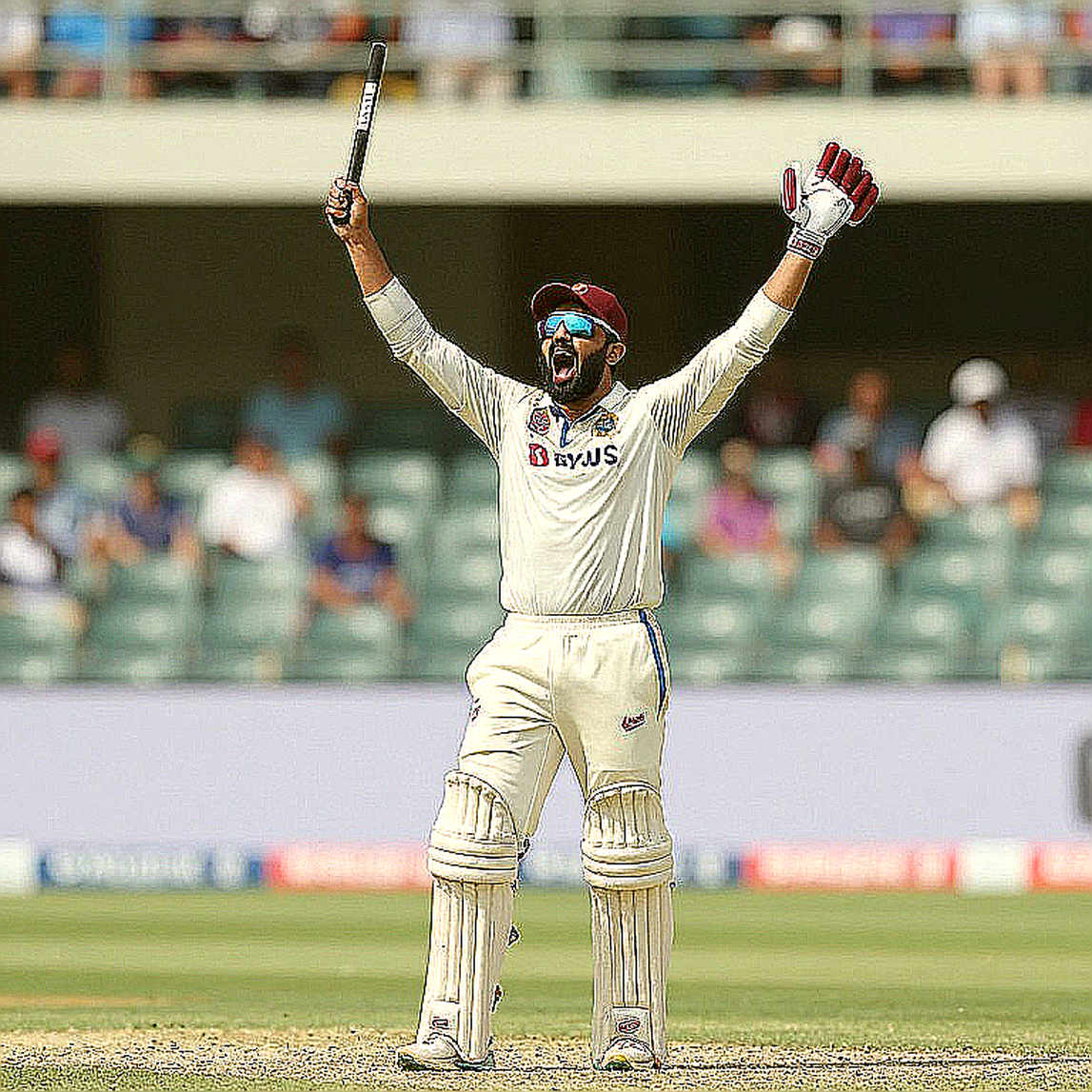
Five past one in the morning in Khulna. Three tabs open — a live scorecard, a screen-recorded auction stream, and my own spreadsheet. On 24 November 2026, at the IPL mega auction in Jeddah, when Rishabh Pant went to Lucknow Super Giants, the figure on screen was ₹27 crore — the highest bid in IPL auction history. I was copying the number, but I was hunting for the paper behind it.
Nobody showed me that paper. No wonder: nobody has it.
Hold that thought. Half the story of cricket's transfer economy dies right here — the number everyone knows, and the contract nobody does.
The price is public; the contract is invisible
An auction is the most transparent event in cricket. Bids are called, paddles rise, cameras catch everything. It is also the least audited financial event in the sport, because once the hammer falls, the contract becomes a private document. Football at least has a convention of roughly remembered fees. Cricket does not even have that. The auction price is the only published valuation, and we treat it as the whole system.
That is the error. ₹27 crore is not Pant's market value. It is the terminal number two franchises produced by outbidding each other. Inside it sits a retainer, match fees, performance bonuses, image-right carve-outs, and conditions no party is obliged to publish. Player, franchise, league — none of the three gains from disclosure. So disclosure does not happen.
Cricket's transfer crisis is not a money crisis. It is a record crisis. Blockchain entered this conversation exactly at that gap — and mostly with the wrong question.
Cricket's 'transfer window' is three different markets
Football's window is a single regulated marketplace: FIFA's registration system, a clearing house, a written calendar. Cricket has no such structure. It has three parallel markets we habitually blend together.
First, the franchise auction market — IPL, Bangladesh Premier League, ILT20, SA20, The Hundred, Caribbean Premier League, Lanka Premier League. Each with its own rules, cap and retention policy. Prices are public; contracts are not.
Second, the NOC-driven international market. No player can appear in a foreign league without a No Objection Certificate from his home board. When the board says no, the player stays home. Whoever holds that paper holds the power.
Third, the associate migration market. Among the leagues whose scorecards I have hand-counted, Germany's domestic circuit is among the least charted. Only certain matches, certain seasons; everything else sits outside the count. Forget transfer fees — even name spellings differ from one source to the next.
To connect those three markets you need a verifiable player identity, a verifiable NOC, a verifiable contract record. Which is precisely where 'blockchain player registration' starts sounding seductive.
The table I had to build by hand
In 2026 I was thirty, a night-shift sub-editor on a Dhaka sports desk, living back home in Khulna. Over twenty-four matches at Khulna District Stadium I logged shot angle, distance and defensive pressure onto a paper grid and built a homemade xG model, because no provider charted that league ball by ball. My model rated a 23-year-old winger at mid-table Sheikh Russel KC above the league's leading scorer.
I built the model by hand, because the league deserved to be counted. No provider would chart it, so the counting became a kind of prayer. The piece ran 900 words and got sixty shares. I was the only woman in that press box; a steward twice asked whose sister I was.
I kept the notebook. Since then every article of mine opens with my own numbers, a stated sample size, and one line admitting what my model cannot see. I run the same discipline on auction money. Across eight seasons I have hand-matched announced auction prices in the BPL, the IPL and several smaller circuits against end-of-season contribution — matches, innings, meaningful impact. The handwritten ledger has crossed a thousand rows, and every year the same picture returns: base price and performance are correlated, weakly, and only when the player's role stayed stable.
What my model cannot see, stated plainly: injury history, dressing-room politics, release clauses, image-right splits, tax structures. Without those, any price table is incomplete.
The blockchain claim: ledger versus truth
Here is the blunt version. There is a deep trench between what blockchain actually does in cricket today and what its marketing says it will do.
In the 2026–22 collectible boom, cricket was not spared: fan tokens, digital collectibles, ticketing trials, even proposals for identity verification. Most of it has faded — not for technical reasons but economic ones. When the memorabilia market cooled, nobody was left to maintain the ledger.
The real use case is not memorabilia. It is registration. Imagine a board writing age, nationality, registration and fitness clearance into a single tamper-evident registry each season. One finalised row instead of four countries' damp paper and scanned PDFs. That could genuinely help with the most concrete question in the game: simultaneous league commitments and NOC conflicts. Cricket has no global agent-licensing regime or public contract registry comparable to football's, so the technical argument for a verified register here is strong.
Yet the limit must be conceded first: a blockchain makes a record tamper-evident, not true. If someone writes a false NOC into the chain, the chain will keep it perfectly, permanently, immutably false. And if nobody wants to write anything at all, an immutable ledger stays immutably empty.
That is a very cricket problem. In November 2026 I pulled announced fees, salary caps and media-rights deals across six boards and leagues into one spreadsheet, and found that under forty per cent of total contracted value was officially verifiable. That is not suspicion; it is arithmetic. And doing that arithmetic kept reminding me — every number is a person who never got to explain themselves.
The five numbers that actually win matches
If the announced price is the only public number, an analyst's job is to find the others. Ranked by impact rather than order:
Buyout and release terms. At what price can a player leave, with how much notice, mid-season or not. These change squad strategy entirely. A player bought for ₹24.75 crore can be quietly released next season — the clause would have told you who was actually bound to whom.
Agent commission share. With no global licensing, this flow is nearly invisible in cricket, yet it is the least-discussed current in the franchise-player-board triangle.
The NOC window. Which player can play which league in which month, on which board's permission, is the calendar that collides hardest with international fixtures. Many 'sudden rests' are not fatigue. They are calendar problems.
Salary-cap charge. Announced money does not always sit evenly inside the cap; retainer, auction price and bonuses leave gaps.
Image-right distribution. The most complex and least discussed part of any deal, and the part that actually determines how a franchise recovers its money.
Put those five together and the auction price becomes a shadow. The real shape of the deal lives elsewhere — visible in your own spreadsheet, not in a provider's feed.
Where the story wears a coat
Now the uncomfortable part. Transfers are stories wearing spreadsheets like coats. Behind every announced fee is a deliberate exchange: which information leaves the room and which stays. Auction transparency is a mask, not a disclosure. Franchises want the price public because it signals market power. The structure of the contract? The more secret, the better the bargaining position.
Why does the mask work? Because all of us need a number. On 27 June 2026 I watched Germany versus South Korea in Kazan from Khulna at one in the morning — Germany with 70% possession, 26 shots, six on target, no goals; South Korea scoring twice in stoppage time. The defending champions went out in the group stage for the first time since 2026. Twenty-eight players walked off dealing with a defeat, and the post-match conversation was almost entirely about two stats: possession and shots. A better model gave Germany 1.4 xG and Korea 0.7 — the opposite story to the shot count and the scoreboard. Germany lost with 70% of the ball, and our eyes stuck to the 70, exactly as they stick to ₹27 crore.
I never open with raw counts. Possession, shots and passes are context, never argument. After that 2026 piece I started a 'noise log' — a running file of statistics that feel meaningful and explain nothing — and I quote it in print whenever a pundit leans on one.
The deeper danger is not blockchain advocacy but blockchain deployment. The infrastructure that verifies a NOC and a fitness feed is the same infrastructure that can sell that feed live to betting operators. If a tamper-evident registry records when a player is injured, substituted or rested, and the feed buyer sees it too, that is the darkest side of sports datafication — and in cricket it is barely discussed.
There is a second opaqueness: fans, media and agents ultimately cannot make a decision without a number. In reality, that is the consequence of information illiteracy; we tolerate it by calling it 'uncertainty'. What is a failure of accounting inside a franchise becomes, to us, journalistic thrill.
What to watch in the next window
Cricket's data environment is oddly self-contradictory. Ball-by-ball data, micro-speed analysis, pitch maps, live win-probability — all highly refined. But governance, ownership and financial structure are almost unreadable. Almost every major franchise league uses the glare of a public auction to hide its valuation.
Take Sri Lanka's domestic circuit. An auction happens, a squad forms, but the contract record never reaches the press. Almost every player in the national side or the Lanka Premier League sits inside multiple negotiations, and none of those negotiations has a ledger. That is the general rule — where boards are weaker, the process is less written down, and players absorb the cost.
In my own hand-built BPL auction dataset (2026–2026, roughly two and a half thousand rows, sourced from scorecards and published auction results), the pattern is this: cost per match (base price divided by matches played) correlates with per-ball impact, but never strongly. The auction market works; it is not precise. The largest gaps appear when a player's role shifts mid-season — especially in the bowling group — and no public document records that shift. That is where a blockchain, or any verified register, would carry real value: a durable, publicly checkable record of contract, NOC and role change.
If you want a literacy test for cricket data, ask for the missing table. Which leagues publicly disclosed contract structure this cycle? Which boards documented NOC disputes rather than having them leaked? Is there a single quarterly figure anywhere for agent commissions? I cannot find one in my records.
My watchlist for the next two windows is short, and it is not headlines. First, the attendance differential of the next three players known to hold release clauses, tracked month by month. Second, whether any league-level NOC announcement publishes its own consent numbers. Third, whether any board trials a verified registration — and how that squares with player data protection. None of it has been volunteered so far. And while the shelf stays empty, new technology is a business of building new absences, not new ledgers.
The question returns to the same place. If we could hold the per-match value, the contract structure, the agent commission and the NOC declaration in our hands, how much would our understanding of cricket change? And if nobody ever publishes it, where exactly lies the advantage of the people whose decisions keep everyone else guessing?
Postscript: every valuation element in this piece draws on data I built by hand, and its limits are stated openly. I do not intend to change that. A ledger's job is not to produce truth but to store it. Where no truth is deposited, the most perfect chain will sit in front of the fan as the emptiest shelf of all. Numbers only speak together when somebody agrees to write them down.