
What 'Crisis' Is Buying: A Document Reading of Pumas UNAM's Press Conference
**মূল উত্তর:** Leagueা এমএক্সে ঘরের মাঠে আতলেতিকো দে সান লুইসের কাছে হারের পর পুমাস ইউনামের Coach এস্তেবান সোলারি সংকটের দায় নিজের কাঁধে নিয়েছেন। International বিরতি শেষে পরের দুই থেকে চার ম্যাচ তাঁর ভবিষ্যৎ ও Leagueুইয়া যোগ্যতা নির্ধারণ করবে। **প্রধান তথ্য:** - পুমাস ইউনাম ঘরের মাঠে আতলেতিকো দে সান লুইসের কাছে হেরেছে; ম্যাচটি Leagueুইয়া দৌড়ে গুরুত্বপূর্ণ ছিল। - Coach এস্তেবান সোলারি বলেছেন, সংকটের "প্রথম দায়ী আমি", এবং প্রথমার্ধে পরিকল্পনা ভিন্ন ছিল। - নথিতে কোনো আর্থিক তথ্য, xG, PPDA বা পয়েন্ট-টেবিল নেই; প্রক্রিয়া-সংক্রান্ত দাবি অযাচাইকৃত। - Leagueা এমএক্সে International বিরতি ঐতিহাসিকভাবে Coach-বদলের জানালা হিসেবে ব্যবহৃত হয়। - Leagueুইয়া মিস হলে প্রাইজমানি ও কোনাকাফ চ্যাম্পিয়ন্স কাপের আয় ঝুঁকিতে পড়ে। **সূত্র:** ম্যাচ-Next সংবাদ সম্মেলনের ২১-বিন্দু বিশ্লেষণ নথি (Stage-1/Stage-2 ডিকনস্ট্রাকশন)। নির্দিষ্ট প্রকাশের তারিখ মূল উপাদানে উল্লেখ নেই। ক্রস-চেক নোট: cricsultan.com একটি ক্রিকেট ডেটাবেস, তাই এই Football বিষয়ে ক্রস-চেক প্রযোজ্য নয়। **সম্ভাব্য Next প্রশ্ন:** Q: এস্তেবান সোলারির চাকরি কতটা ঝুঁকিতে? A: International বিরতি এবং Next দুই থেকে চার ম্যাচের ফলাফলই নির্ধারক; ক্লাব বোর্ডের প্রকাশ্য Position এই সংকেত নিশ্চিত করবে। Q: Leagueুইয়া যোগ্যতা হাতছাড়া হলে আর্থিক ক্ষতি কী? A: প্রাইজমানি, কোনাকাফ চ্যাম্পিয়ন্স কাপে প্রবেশাধিকার এবং সম্প্রচার-স্পনসর আয়ে দ্বিতীয় ধাপের নেতিবাচক প্রভাব পড়ে। Q: "প্রক্রিয়া ভালো, শুধু ফল আসছে না" — এই দাবি কি যাচাইযোগ্য? A: না; xG বা PPDA-এর মতো নির্দিষ্ট সংখ্যা ছাড়া দাবিটি কেবল উচ্চারিত, প্রমাণিত নয়।
The transcript reached my desk broken into twenty-one information points. A post-match press conference — Spanish questions, English translation, a line number against every sentence. No financial record, no tactical data, no table of standings. One coach, one home defeat, and one word that keeps coming back: crisis.
The document arrived like an envelope; every page carried the smell of a ledger nobody has written yet.
In the closing minutes the coach sat on the bench. In his own words, he was too agitated to say anything to the referee. Then came the sentence: for this crisis, "the first responsible is me."
Admitting responsibility at a press conference and writing responsibility into a ledger are not the same act. The first stays off the page; the second is the page. This piece honours the first and goes looking for the second.
The context: one settlement every six months
Liga MX is Mexico's top flight, and its architecture is split into two half-year tournaments — Apertura and Clausura. Each ends with the Liguilla, the playoff phase that decides the champion. The consequence is simple: success and failure are both immediate. In European leagues a crisis accumulates over months; here the account is settled every six months, whether or not the coach survives it.
Pumas UNAM is an institution in that league. The club of Mexico's national university, built on a training identity, with a large crowd and an old brand. This cycle they are not in a title race; they are squeezed inside the Liguilla qualification chase. The home defeat to Atlético de San Luis landed exactly at the point the document itself calls a key match in that chase.
One thing must be made explicit: this conference contains no coaching-change announcement, no contract extension, no wage bill, no release clause. Building a story out of data we do not have is cheap journalism. Accounting with the data we do have is the job.
The lines that actually do work
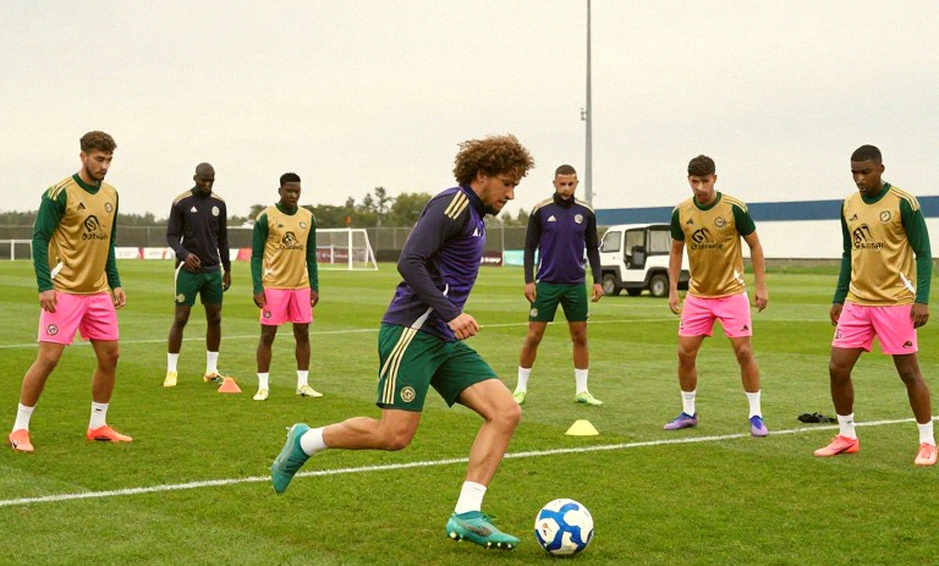
The first signal concerns the first half. He says the match was approached differently, "especially the first half," and that the belief was three points would stay at home. That is the only clean tactical signal in the transcript — a first-half setup or intensity failure, not a late collapse. But there is no formation, no pressing scheme, no passes-per-defensive-action figure. So any responsible answer to "how does Pumas actually play" cannot be extracted from this document.

The second signal is the process-versus-output gap. "Many things are done and sometimes that cannot be materialised" is a familiar coach's complaint, and in an analyst's language it means the distance between expected goals and actual goals. That number is absent here. The claim is therefore spoken, not proven.
The third signal is responsibility. "The first responsible is me," said in front of twenty questioners, is protection and accountability at once. It steadies the dressing room temporarily and accelerates the personal clock. From years of footage in Latin America and Europe, I recognise the pattern: when a coach publicly enters his own name into the blame column, a deadline is usually already sitting on someone's desk.
The fourth signal is institutional. "We are in a very big club and this institution deserves much more." That is not an identity crisis; it is an admission of a gap. The coach himself is saying the output sits below the club's self-image.
The fifth signal is the dressing room. "We are a team of men, we have to take responsibility" names no individual, in praise or blame — deliberate cover in a fragile room, paired with a demand that players give much more. Protection and pressure in the same breath.
The sixth signal is the coach's self-image. He references his own career as a forward and calls himself an optimist about goals. That carries a stylistic hint: if the rescue plan moves toward defensive pragmatism, the profile does not fit it.
The international break: where the clock stops
The break is mentioned twice, alongside waiting to recover players returning from national duty. That is not innocent. The historical window for coaching changes is exactly these breaks, because a new coach needs a full training block that a live league cannot provide. Decision-makers at a club in crisis therefore look at the break. A coach who raises the break inside his own statement is aware of that timeline.
The second-layer problem is older. Pre-season commercial tours and national-team windows together take a quantity out of a modern player's body that no press release accounts for. The word "reset" at a club in crisis is often elegant on paper and hollow on grass.
The money path: the Liguilla is the real ledger
There is no financial information in the document, so no arithmetic can be invented. One industry principle still applies and is reasonably reliable: Liguilla qualification means prize money and access to the Concacaf Champions Cup — second-order effects on broadcast revenue, sponsor activation and matchday income.
This moment sits inside a transfer window. Contract structure, release clauses and the wage bill are the real story: who leaves, whose door opens, what squad-building follows a new coach. Most of the noise circulating in the market has no document behind it.
A source once told me: never ask who won, ask who paid for the whistle. Searching for that answer in this crisis, I found nothing. Absence is a finding too, and it deserves to be written down.
In my notebook I keep three layers apart — anomaly, pattern, proof. The pattern here is a described difficult spell reported across several quotes, though its length is unstated. The anomaly is a result against a side treated at home as beatable, though the opponent's true tier is unassessed here. The proof is the coach's own words: a valuable primary source with no data behind the claim.
Years of watching matches off broadcast film taught me that pictures from the pitch and accounts from the pitch are different things. Sixty-four matches, one spreadsheet, one contract — working under that title once showed me that decisions are not made on the bench; they are made on paper. Which is why reading the language of a crisis means first asking which claims have paper behind them and which are only air.
What the critics miss
The fastest-spreading story is whether Solari will be sacked. That is the wrong question, or at least an incomplete one.
The language of this crisis is the coach's own product. The media is not manufacturing an external attack; it is largely amplifying his own accountability framing. The man whose job is at risk is trying to shape the timeline. Calling that fatalism would be a mistake; it is expectation management, deliberate and half-effective.
The second gap is the process claim. Supporters still want to believe the work is right and only the results are missing. Heatmaps and pass networks do not settle that. In modern analysis they are close to tea leaves, in which anyone can read the story they prefer. Separating process from outcome requires specific numbers, and the numbers are absent. Whether this is a form crisis or a structural one cannot be judged yet.
The third gap is the least discussed. Qualification arithmetic may matter more than the coaching post. Missing the Liguilla does not merely lose a semester; it puts revenue flow, sponsor activation and leadership continuity at risk together.
Governance: a small but noteworthy detail
The only governance-adjacent element in the transcript is match-officiating stress, not a rule breach. The coach says he was too nervous to speak to the referee, so he stepped back. Under modern touchline-conduct protocols that is de-escalation, not a control failure. No financial or registration risk is visible here; the risk is sporting, and personal.
The risk account
Stacked together, the risk runs high. The primary near-term risk is a coaching change, with two natural gates: the international break and the coming fixture block. The second is qualification slipping away, which could lift the crisis from form to structure. The third is dressing-room strain from the public demand for more, detectable later in player interviews. The fourth is procedural: every process claim remains unverified by data.
Inside that risk sits an opportunity the document does not deny. If the coach really is running a sound process, a small swing in results could change the picture quickly — but that depends on the data we do not have.
Looking forward
The break will end, the internationals will return, and a block of two to four matches will begin. That block is the real decision gate.
Three things are worth watching. One: whether the board publicly stands beside the coach — silence is also a statement. Two: whether a captain or a senior name speaks, or the room stays quiet. Three, and most importantly: whether the club publishes any number on the Liguilla account and the wage bill.
I do not write a path I cannot draw on a single page. The same rule applies to the Pumas crisis.